What is a static ad?
A static ad is an advert made of a single still image and text, with no video, animation or swiping. It appears in social feeds, on websites and in print, and is quick to make, simple to test and readable at a glance.
Last updated
In more detail
Video gets attention, but static ads remain a staple of many ad accounts because they are cheap to produce and easy to change. One photograph and one headline can become many variations in an afternoon, which makes static ads a natural format for testing which message, offer or picture works best. They also load quickly and, when designed well, can be understood at a glance. A strong static ad has one focal image, one short headline, the brand clearly visible and a single call to action, and it is sized for each placement: square or portrait for feeds, tall for stories, wide for display banners. The common mistake is cramming several messages, prices and badges into one picture, so nothing is read. Another is reusing one design everywhere and letting platforms crop off the logo or the offer.
Examples from real work

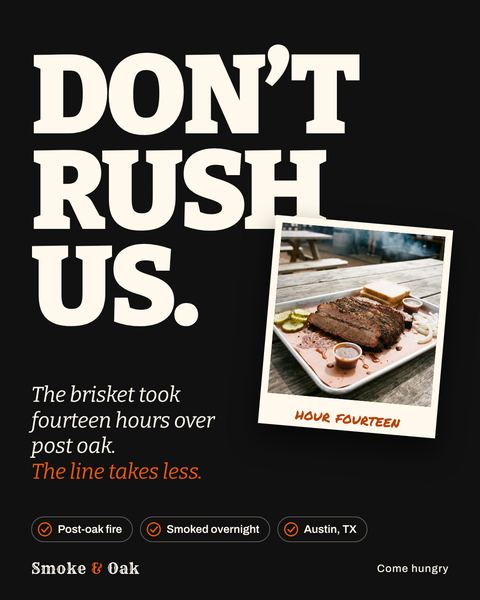
Do and don’t
Do
- Use one image, one headline and one call to action.
- Make the brand visible without relying on the caption.
- Size a version for each placement instead of letting platforms crop it.
Don’t
- Cram in several offers, prices and badges.
- Put key words near the edges, where platforms lay their own buttons.
- Run one version for months; refresh it when results fall.
Where Wonib fits
Wonib makes static ads with the picture and the words in the brand, at the size of the platform they are made for.
Questions people ask
What is the difference between a static ad and a display ad?
Static describes the format: a still image rather than video or animation. Display describes where the ad runs: on websites and apps through display networks. A display ad can be static or animated, and a static ad can run in social feeds too.
Do static ads still work?
Yes. They are cheap to produce, quick to vary and clear at a glance, which makes them useful for testing messages and offers. Many advertisers run static and video ads side by side and let the results decide the budget.
What sizes should a static ad be?
It depends on the placement. Social feeds favour square and portrait images, stories need a tall format, and display networks use a set of standard banner sizes. Check each platform's current specifications before exporting.
Templates, tools and examples
Related terms
- Ad creativeAd creative is the part of an advertisement that people actually see and hear: the image or video, the headline, the text and the call to action.→
- Display adA display ad is a visual advertisement, such as a banner, image or animation, that appears on websites, apps and video platforms beside the content people came for.→
- Ad fatigueAd fatigue is the drop in an ad's performance that happens when the same audience has seen it too many times.→
- A/B testAn A/B test is an experiment that shows two versions of the same thing, such as a headline, an email or a page, to two similar groups of people at the same time, then compares the results to see which performs better.→
More in Advertising
Do it with Wonib
Put the words into practice
Wonib learns your brand once, then makes the posts, images, copy, presentations and documents in it, checked against the brand before you see them. Start free with 1,000 credits, no card needed.
Last updated