What are brand pillars?
Brand pillars are the few core ideas a brand stands on, often three to five, such as its values, strengths or personality traits, that support its positioning. They guide what the brand says and does, so messages, products and design point the same way.
Last updated
1,000 free credits to start. No card needed.
In more detail
Positioning says where a brand sits in the market; pillars say what holds it up. Each pillar is a short label with a sentence or two explaining what it means in practice and what it rules out. A flower delivery brand might stand on fresh, close by, cheerful and honest. Brand pillars are different from content pillars, which are the recurring topics a social account posts about, though good content pillars often grow out of them. They help when briefing an agency, writing a campaign, choosing a partner or deciding between two designs: the better option is the one that fits more of them. The common mistake is choosing words every competitor could claim, such as quality, innovation and trust, which guide nobody. Another is having seven or eight, so none stands out. A third is never explaining them, so each person reads the words differently.
Examples from real work

Do and don’t
Do
- Choose three to five pillars and explain each in a sentence.
- Say what each pillar rules out as well as what it means.
- Use them to judge briefs, campaigns and designs.
Don’t
- Pick words any competitor could claim, such as quality or trust.
- Keep adding pillars until none of them stands out.
- Leave them as single words that each person reads differently.
Questions people ask
What is the difference between brand pillars and content pillars?
Brand pillars are the core ideas the whole brand stands on. Content pillars are the recurring topics a social media account or a blog posts about. Good content pillars usually follow from the brand pillars.
How many brand pillars should a brand have?
Three to five is a practical starting point. Fewer can leave gaps, and more become hard to remember and apply, so each pillar should earn its place.
What are examples of brand pillars?
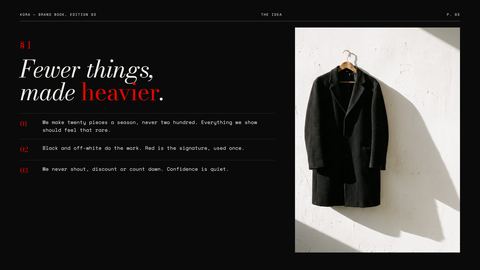
A flower delivery brand might choose fresh, close by, cheerful and honest. A fashion label might choose rarity, restraint and quiet confidence. Each label comes with a sentence on what it means in practice.
Are brand pillars the same as brand values?
Values are often one kind of pillar. Pillars can also include what the brand is best at, its personality and its proof, so they cover how it acts as well as what it believes.
Templates, tools and examples
Related terms
- Brand promiseA brand promise is the experience a brand commits to giving its customers every time they deal with it.→
- Brand positioningBrand positioning is the specific place a brand aims to hold in customers' minds compared with the alternatives: who it is for, what it offers them, and why it is a better choice for that group than anything else on offer.→
- Content pillarsContent pillars are the three to five core topics a brand commits to posting about regularly.→
- Brand voiceBrand voice is the consistent personality a brand shows in its words: the vocabulary it prefers, the rhythm of its sentences and the things it never says.→
More in Brand
Do it with Wonib
Put the words into practice
Wonib learns your brand once, then makes the posts, images, copy, presentations and documents in it, checked against the brand before you see them. Start free with 1,000 credits, no card needed.
Last updated