The story
Wonib began in Pune, inside a small marketing team that looked after two brands at once: a telecom software company with twenty years of customers, and a young AI product with a voice all its own. Between them they needed hero images for every article, posts for every platform, decks for every meeting, datasheets, ads, a video now and then. Hundreds of pieces a month, for two brands that must never be mistaken for each other.
The AI tools of the day could make any of it in seconds. None of it was theirs. The blue was close but wrong. The font was a cousin. The copy reached for words the brand would never say. Every piece came back for a second round, and a third, and the team spent its days as inspectors of work it hadn’t asked to inspect.
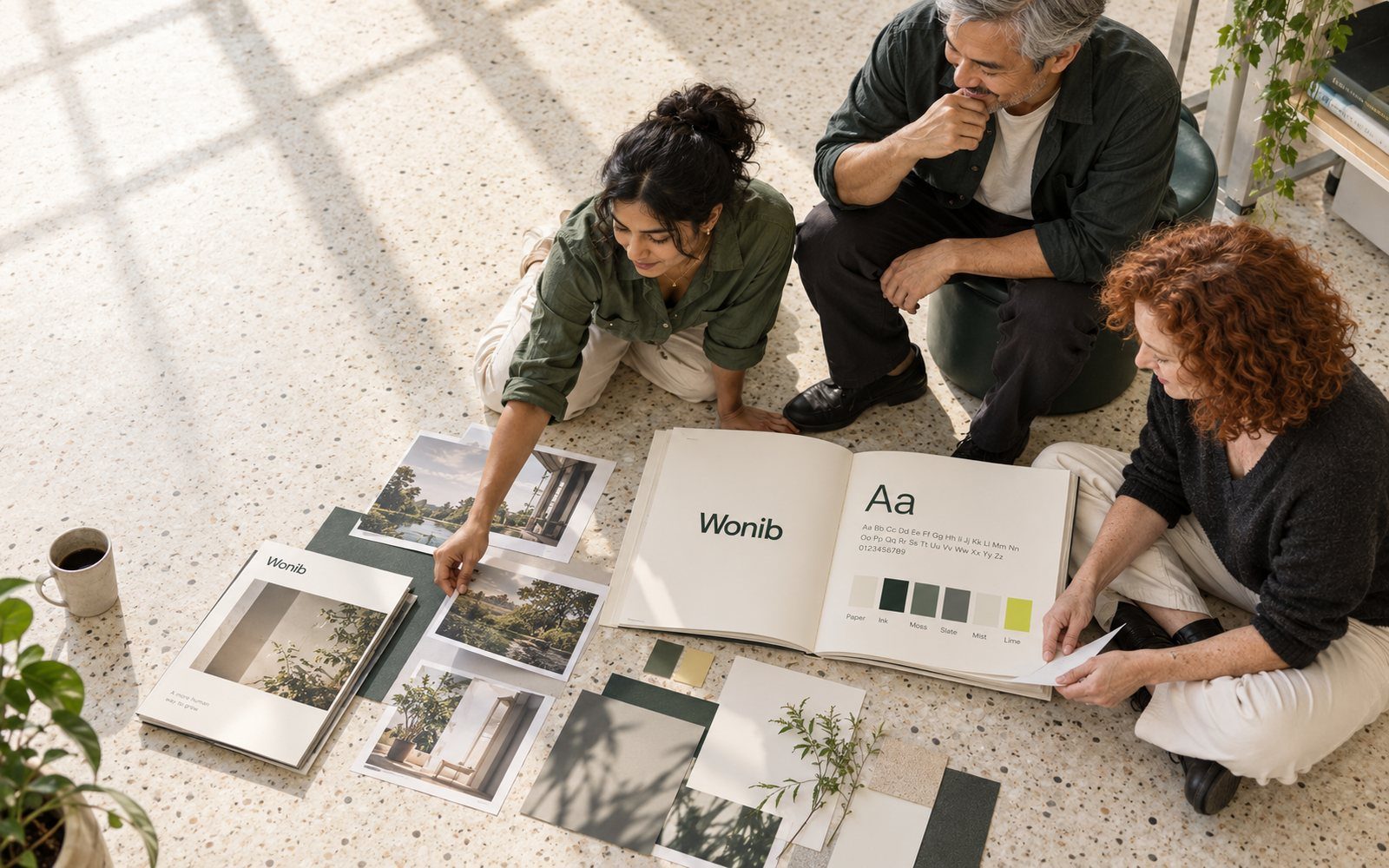
So the team wrote the brand down once, properly: the colours with their roles, the typefaces, how the photographs are lit, how the sentences are built, the words that never appear. Then it built a tool that reads that record before it makes anything, and checks its own work against it before anyone else sees it. The second round disappeared. The inspectors went back to being marketers.
That tool is Wonib. The name comes from the nib, the part of the pen that makes the mark: Wonib does the precise, skilled part, in the brand’s own hand, never its own. It now works for any brand you give it, from a website or a brand book, in English, ten Indian languages and seven of the world’s most spoken, priced for one person, in India and everywhere else.